
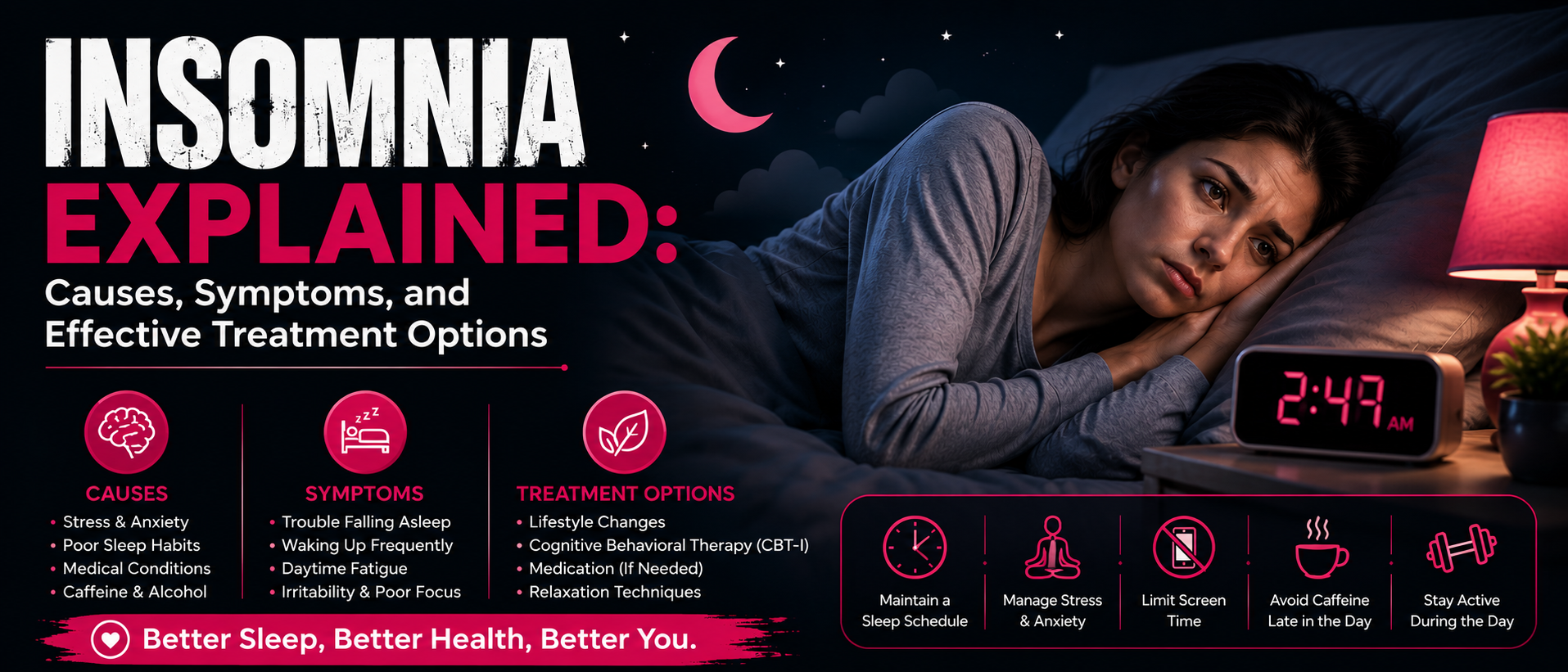
Insomnia is one of the most common sleep disorders, affecting millions of people worldwide. It can make it difficult to fall asleep, stay asleep, or wake up feeling refreshed. While occasional sleeplessness is normal, persistent insomnia can impact your physical health, emotional well-being, and daily performance.
Understanding the causes, symptoms, and available treatment options can help individuals take the right steps toward improving their sleep and overall quality of life.
What Is Insomnia?
Insomnia is a sleep disorder characterized by difficulty falling asleep, staying asleep, or waking up too early and being unable to return to sleep. It may be short-term (acute) or long-term (chronic), depending on how long the symptoms persist.
- Acute Insomnia: Lasts from a few days to several weeks and is often triggered by stress or life events.
- Chronic Insomnia: Occurs at least three nights a week for three months or longer and may require professional evaluation and treatment.
Common Causes of Insomnia
Many different factors can contribute to insomnia, including:
Stress and Anxiety
Work pressures, financial concerns, family responsibilities, or major life changes can make it difficult to relax and fall asleep.
Poor Sleep Habits
Irregular sleep schedules, excessive screen time before bed, daytime naps, and consuming caffeine late in the day may interfere with healthy sleep.
Medical Conditions
Certain health conditions such as chronic pain, asthma, acid reflux, thyroid disorders, and neurological conditions can contribute to insomnia.
Mental Health Conditions
Depression, anxiety disorders, and other mental health conditions are commonly associated with sleep difficulties.
Medications
Some prescription and over-the-counter medications may interfere with normal sleep patterns as a side effect.
Lifestyle Factors
Alcohol, nicotine, caffeine, and recreational drug use can negatively affect sleep quality.
Symptoms of Insomnia
People with insomnia may experience:
- Difficulty falling asleep
- Waking frequently during the night
- Waking earlier than desired
- Feeling tired after waking up
- Daytime fatigue
- Difficulty concentrating
- Poor memory
- Mood changes or irritability
- Reduced productivity
- Increased stress levels
Risk Factors
Certain individuals may have a higher risk of developing insomnia, including:
- Older adults
- Women, especially during pregnancy or menopause
- People experiencing high levels of stress
- Individuals with chronic medical conditions
- Shift workers
- Frequent travelers experiencing jet lag
How Is Insomnia Diagnosed?
A healthcare provider may evaluate insomnia by reviewing:
- Your sleep history
- Medical history
- Current medications
- Lifestyle habits
- Sleep diary or sleep log
In some cases, additional sleep studies may be recommended if another sleep disorder is suspected.
Treatment Options
Treatment depends on the underlying cause and severity of insomnia.
Improve Sleep Hygiene
Healthy sleep habits often improve sleep quality, including:
- Go to bed and wake up at the same time every day.
- Keep your bedroom cool, dark, and quiet.
- Avoid screens before bedtime.
- Limit caffeine and nicotine in the evening.
- Avoid heavy meals close to bedtime.
- Exercise regularly, but not immediately before sleeping.
Cognitive Behavioral Therapy for Insomnia (CBT-I)
CBT-I is considered one of the most effective treatments for chronic insomnia. It helps individuals identify and change thoughts and behaviors that interfere with sleep.
Manage Stress
Relaxation techniques such as meditation, deep breathing exercises, yoga, and mindfulness can help reduce stress and promote better sleep.
Prescription Medications
In some cases, healthcare providers may prescribe sleep medications when appropriate. These medications should only be used under medical supervision and according to the prescribed instructions due to the potential for side effects and dependence.
When to See a Healthcare Provider
Seek medical advice if:
- Insomnia lasts longer than several weeks.
- Poor sleep interferes with work or daily activities.
- You experience excessive daytime sleepiness.
- Sleep problems occur alongside depression, anxiety, or other health concerns.
A healthcare professional can help identify the underlying cause and recommend the most appropriate treatment.
Tips for Better Sleep
- Maintain a consistent bedtime routine.
- Avoid caffeine late in the day.
- Reduce alcohol consumption before bedtime.
- Keep electronic devices out of the bedroom.
- Use your bed only for sleep and relaxation.
- Create a calm and comfortable sleeping environment.
- Avoid long daytime naps.
Conclusion
Insomnia can affect nearly every aspect of your physical and mental health, but effective treatment is available. By understanding its causes, recognizing the symptoms, and adopting healthy sleep habits, many people can significantly improve their sleep quality. If insomnia becomes persistent or begins affecting your daily life, consult a qualified healthcare professional for proper evaluation and personalized treatment recommendations.